

Tree care in Austin starts with a diagnosis and a prognosis: what is actually wrong with the tree, and what its outlook is. That comes before any program is sold. From there the work is fertilization, compost and soil amending, mulch, insect and disease control, oak wilt management, root flare management and establishment care for young trees.
Prognosis comes before diagnosis here. If a tree is not a good candidate for preservation, there is no point spending your money going down the diagnostic path, and we will say so. An arborist consultation is where that assessment and the care plan come from. The work itself is set out to ANSI A300, the tree care performance standard, and our crews work to ANSI Z133 for safety.
Tree Care Plans
A tree care plan is what the property needs, written down and put in order. It comes out of a site visit: an arborist walks the trees, looks at the canopy, the root zone, the soil and the way the place is watered, and then sets out what to do and what to do first.
A plan can be small. Sometimes it is a change to the irrigation and a load of compost. It can also pair a fertilization program with pruning, airspade work and mulch as one plan for the property instead of a set of separate purchases. It says what not to spend money on as well. A tree with no future does not get a treatment schedule, and a tree that is fine gets left alone.
The plan is written to be revisited. On a program the same arborist is back on the property through the year, so it gets adjusted against what the trees actually did rather than what we expected them to do. Most of what damages a tree in a yard happens slowly, and it gets caught by somebody standing under the tree more than once.
Fertilization Programs
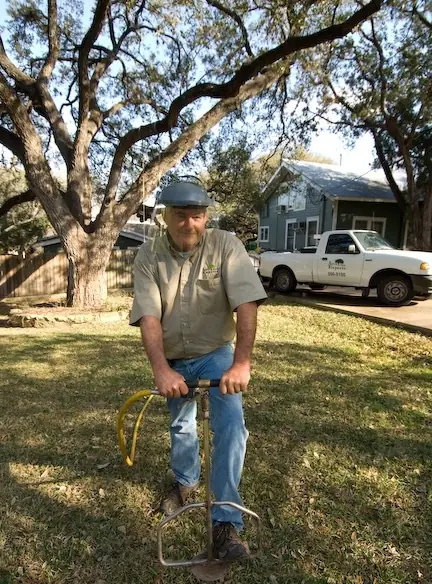
We sell two, and they are named for what they are. The basic tree care program is two treatments a year: a fall deep root feeding, which is the main one, and a spring foliar feeding. The full tree care program is four visits. It keeps both of those and adds two more, and those two are soil conditioning rather than fertilizer.
The visits are timed to what the tree is doing rather than to a billing month. The spring feeding goes on while new foliage is still soft enough to take material in through the leaf surface. The fall feeding lands after shoot growth has stopped, when what the tree does with it goes to roots. The two soil conditioning visits are triggered by conditions instead of by a date: one when heat and drought are doing what they do to a root zone here, one when winter is breaking and the tree is about to move. Seasons in Central Texas do not run on schedule and neither do trees, so we watch for the window and tell you when a visit is due.
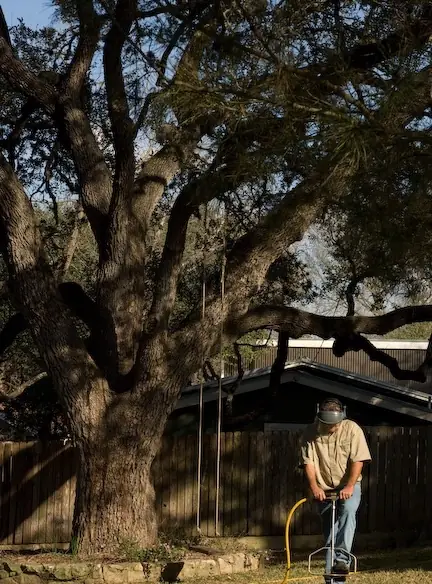
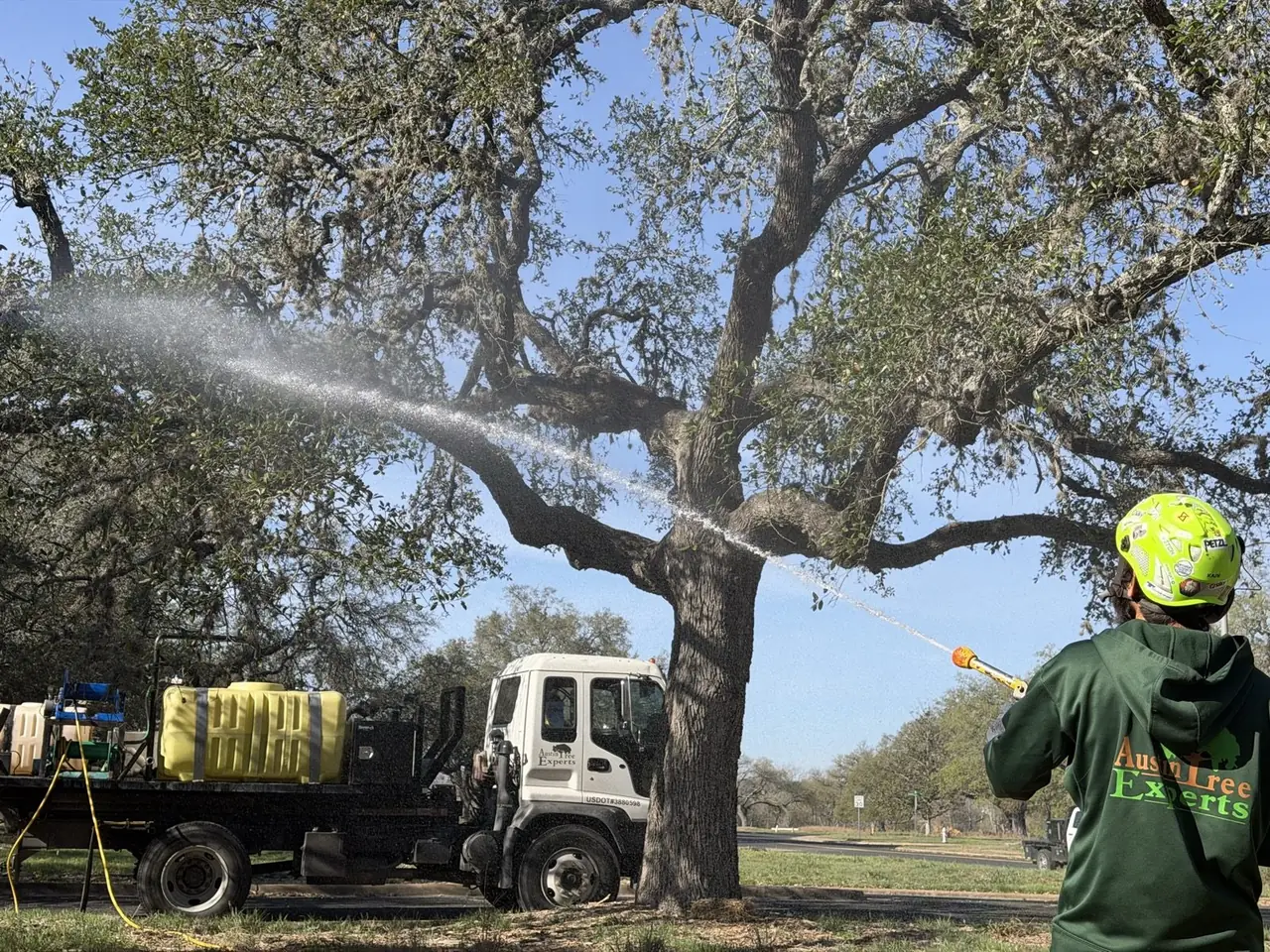
Most of the material goes into the soil inside the root zone under pressure, from a truck mounted 600 gallon tree sprayer that doubles as a root feeder. That puts it at the depth the feeder roots occupy instead of on the lawn above them. The spring feeding is sprayed onto the foliage from the same rig. Trunk injection, straight into the tree’s vascular system, is reserved for a few specific situations: oak wilt fungicide treatment, and micronutrient work on trees an arborist has diagnosed with a deficiency in Austin’s high pH soils.
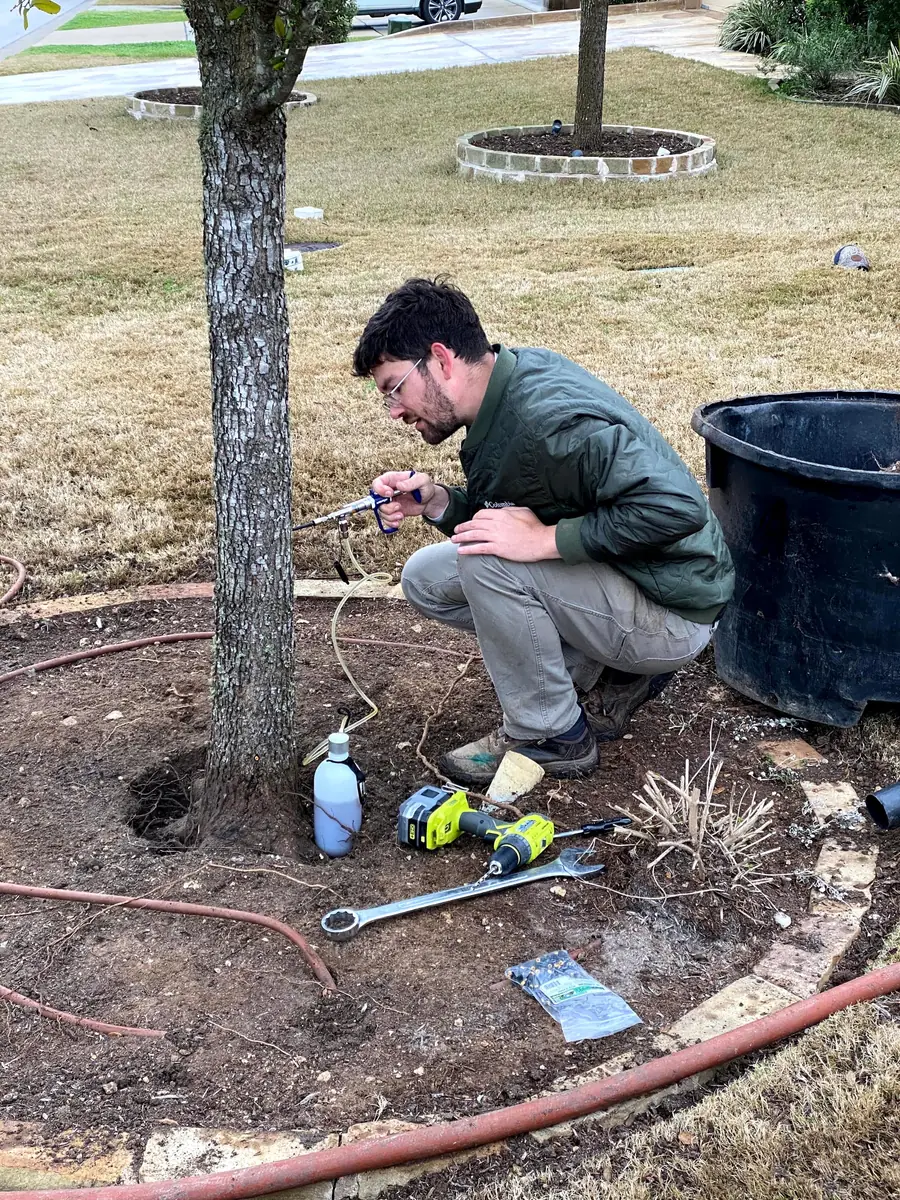
The other thing a program buys is presence. Every visit includes an inspection by the arborist performing the treatment: what the canopy has done since last time, whether the watering suits the season, what has changed at the root zone, and whether anything is going down on the lawn that should not be. Both programs are written for trees. Hedges, shrubs and turf are not what they cover.
Compost and Soil Amending Application
Compost is the other half of feeding a tree and it is a service in its own right. We deliver it in bulk and apply it across the root zone: a thin top dressing where the roots are under lawn, light enough that the grass grows up through it, and under the mulch where they are in beds. Austin soils give it plenty to do, thin and alkaline over the limestone to the west and heavy clay to the east, and organic matter breaks down fast in both.
Where the ground is compacted enough that material spread on top would just sit there, we open the top few inches with an airspade first and work the compost down into the loosened soil. Compressed air moves soil at high velocity without cutting the roots in it, which is the reason we can amend a root zone at all rather than only dressing the surface of one. One of our trucks carries a 300 gallon spray body with an air compressor mounted alongside it, so the same crew can airspade a root zone and root feed the trees standing in it on one visit instead of two.
The two soil conditioning visits on the full program are this kind of work: material aimed at the soil the roots are in rather than at the tree. Compost is buyable on its own and a program is buyable on its own. We often recommend compost before a program starts or alongside it, and that is a recommendation. Neither one is a condition of the other, and it is also work a homeowner can do without hiring anybody. We would rather you do it yourself than skip it. Products, load sizes and delivery are on the mulching and composting page.
Mulching
Mulch covers the root zone and stays back off the trunk and the root flare. Piled against the bark it holds moisture where the tree does not want it, and it buries the flare, which is a separate problem further down this page. Depth is a judgment rather than a formula, and area is the part people underestimate. A three foot ring around a mature tree is cosmetic. It is not a large enough area to change anything about the tree’s condition.
Our mulch is made from our own work: chip debris off the trees we prune and remove, plus the larger wood run through the horizontal grinder at our yard. We leave the fines in and add no color. Crews will spread and rake out a load, or drop it and leave the spreading to you.
Mulching is soil management work under ANSI A300 Part 2. How far out to go and how much to put down is a call an ISA certified arborist makes at the tree. The mulch calculator will turn an area into cubic yards, and the rest of the detail is on mulching and composting.
Insect and Disease Control
Trees fight off a good deal on their own, and some of what we get called about needs no treatment at all. When one is warranted we are set up to apply it, by foliar spray, into the soil, or by injection, whichever fits the target and the site.
Recurring caterpillar defoliation is one we treat regularly in Central Texas. The others we are called out to look at are hypoxylon canker on stressed oaks, ball moss, aphids and scale on pecans and crape myrtles, and borers in weakened or newly transplanted trees.
Treatment starts with diagnosis every time. We identify what is actually present, decide whether treating it is warranted at all, and then choose the method. We do not spray when there is no target. Insect and disease work sits under ANSI A300 Part 10, the integrated pest management standard, and restraint is what that standard asks for as much as we do.
Oak Wilt Management
We diagnose and manage oak wilt, and it has a page of its own. Oak wilt treatment covers diagnosis, systemic fungicide injection, trenching to separate root systems, ongoing monitoring, replanting a site that has lost oaks, and drone survey mapping on larger properties.
What belongs here is the other half of it. A property with oak wilt on it is still a property with trees to look after, and we manage those on a tree care program alongside the oak wilt work rather than instead of it. Water, compost, mulch, soil that is not compacted, no herbicide in the root zone, and an arborist on the property several times a year watching how the pattern moves.
Root Flare Management
The root flare is where the trunk widens out and becomes roots, and it belongs at the surface. A trunk that goes into the ground like a post has been buried by something: fill from a build, mulch piled up over years, turf grown over it, or soil washed in. Buried flares and compacted soil are two of the most common things we find at the base of a declining tree in an Austin yard, and both are addressable.
We do that work with compressed air. An airspade moves soil without cutting the roots in it, which is what lets us take the fill off a flare, break up a root zone that has been driven on or walked over for years, and get compost into it while it is open. The same tool is how we find roots before deciding anything about them, including girdling roots and roots that have to be cut cleanly and deliberately for a driveway or a foundation rather than torn out by a trencher.
Root management is ANSI A300 Part 8. The full scope of this work, the equipment and what an excavation looks like on site are on the airspade services page.
Young Tree Establishment and Promoting Growth
A newly planted tree is not a mature tree with less wood on it. It is working through transplant shock with a root system that has not left the root ball yet, and the first few years decide most of what it becomes. Establishment care is the work of getting it through that period and then getting it to put on growth.
We provide it for trees we planted and for trees somebody else planted: monitoring through the establishment period, working out how the tree is actually being watered and adjusting it, mulch over the root zone, compost and feeding, and treatment where a tree is not establishing well. On sites with no irrigation we can bring water to new plantings off the 600 gallon body. Structural pruning belongs to establishment too, and it is separate work from a care program.
The judgment in it is knowing which of those a young tree actually needs. A tree that is not growing because it is short of water is not a tree that needs feeding, and a tree in a compacted parking island needs the soil dealt with before anything else is worth buying. If you are still choosing the tree, the species, or the spot it goes in, that is on the tree planting page.