
Mulch Delivery & Composting in Austin

Mulch delivery in Austin and Central Texas comes in three load sizes — ten, fifteen and thirty cubic yards — and you do not have to buy the spreading with it. A load can be bought on its own, with no other work attached. The mulch is what we make from our own pruning and removal jobs; compost is a separate service.

The rest of this page is the detail behind that: what our mulch actually is and how it differs from what comes in a bag, how much of it a tree needs and over how much ground, and where compost fits — which is a different product, bought from somewhere else, doing a different job.

What our mulch is, and what it is not

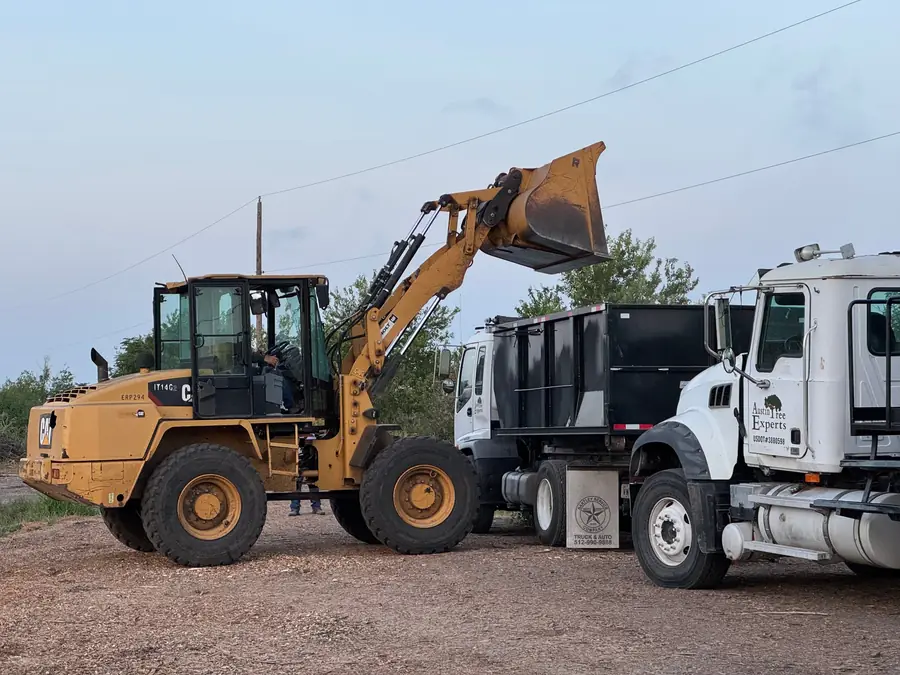
Our mulch product is the material we make from our own tree pruning and tree removal work. Chipper debris, plus grindings off the horizontal grinder in our yard. Trees we took down and pruned around Austin come back out as the material that goes under the next generation of them.

That origin is also why it looks different from what you are used to buying. Keith’s description of the difference:

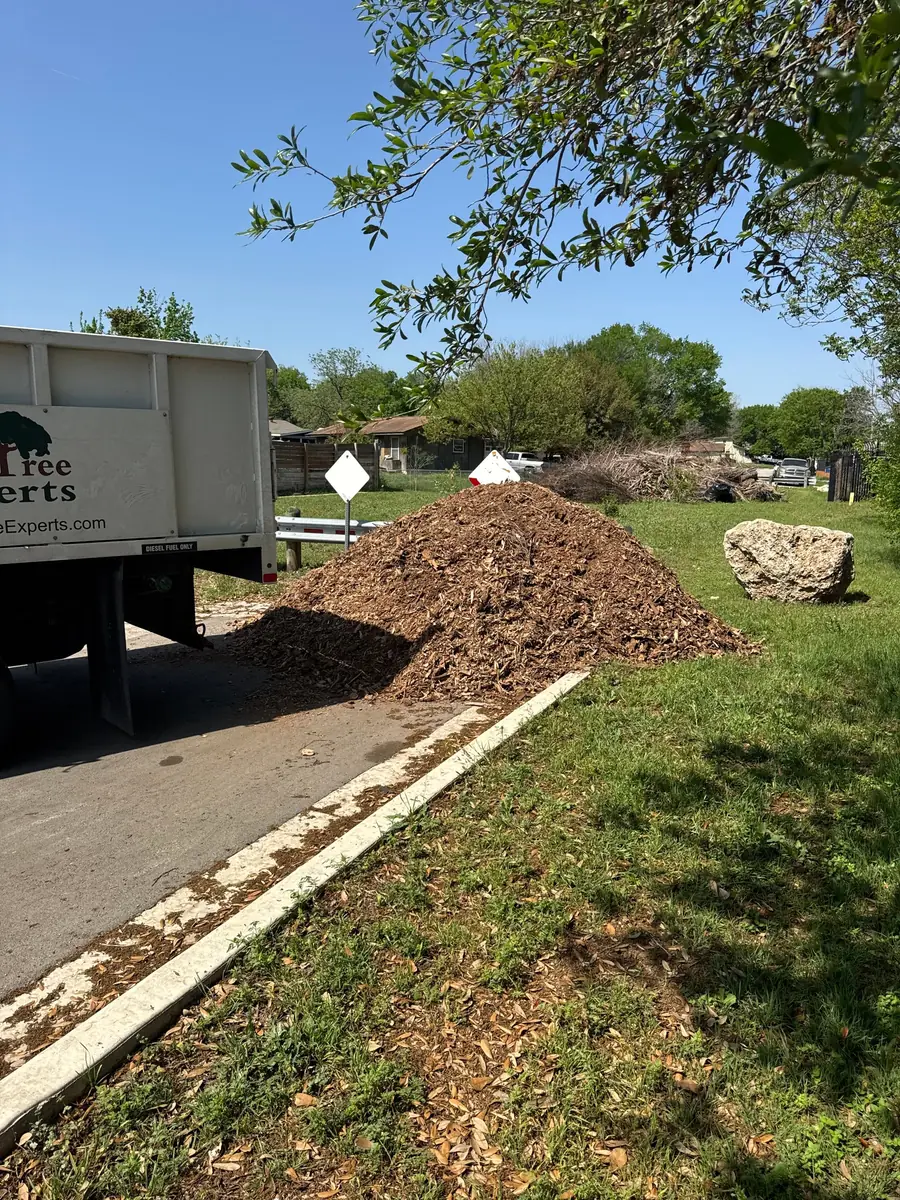
Most commercially available mulches are double ground, screened for size, the compost screened out of the mulch, and then run through a coloring system, which is literally using ink to dye the color of the mulch. Our mulch is not that heavily processed. All of the fines are still mixed in with the mulch. There is no dye or ink to color the mulch. It is a very organic and natural product.

The fines are the part worth understanding. “Fines” is the small stuff — the fraction that is already most of the way to compost. A screening step takes it out. We leave it in — it is small amounts of compost, still mixed into the mulch.

And the honest other half, which he volunteered before we asked for it:

Some people like the aesthetics of the very symmetrical sized mulch pieces and the color that is applied to it. Aesthetically, some people think it looks nice. Our mulch is going to be variable in size and shape, more natural looking, and ultimately better for the trees.

If a uniform, dyed bed is the look you are after, ours is not that product and we would rather tell you now than have it show up on your driveway.

The second product — single grind, for trails

We also make a single grind product that comes only off the horizontal grinder. Much larger pieces, bigger chunks that are slower to decompose, and generally more suitable for making a trail than for mulching a tree. It is longer lasting than the standard mulch — not permanent, longer lasting. If what you want is a path through a wooded section of your property that will still be there in a few years, this is the one to ask about.

Three load sizes, and why the biggest one is quoted low

We deliver in three sizes: 10, 15 and 30 cubic yards.

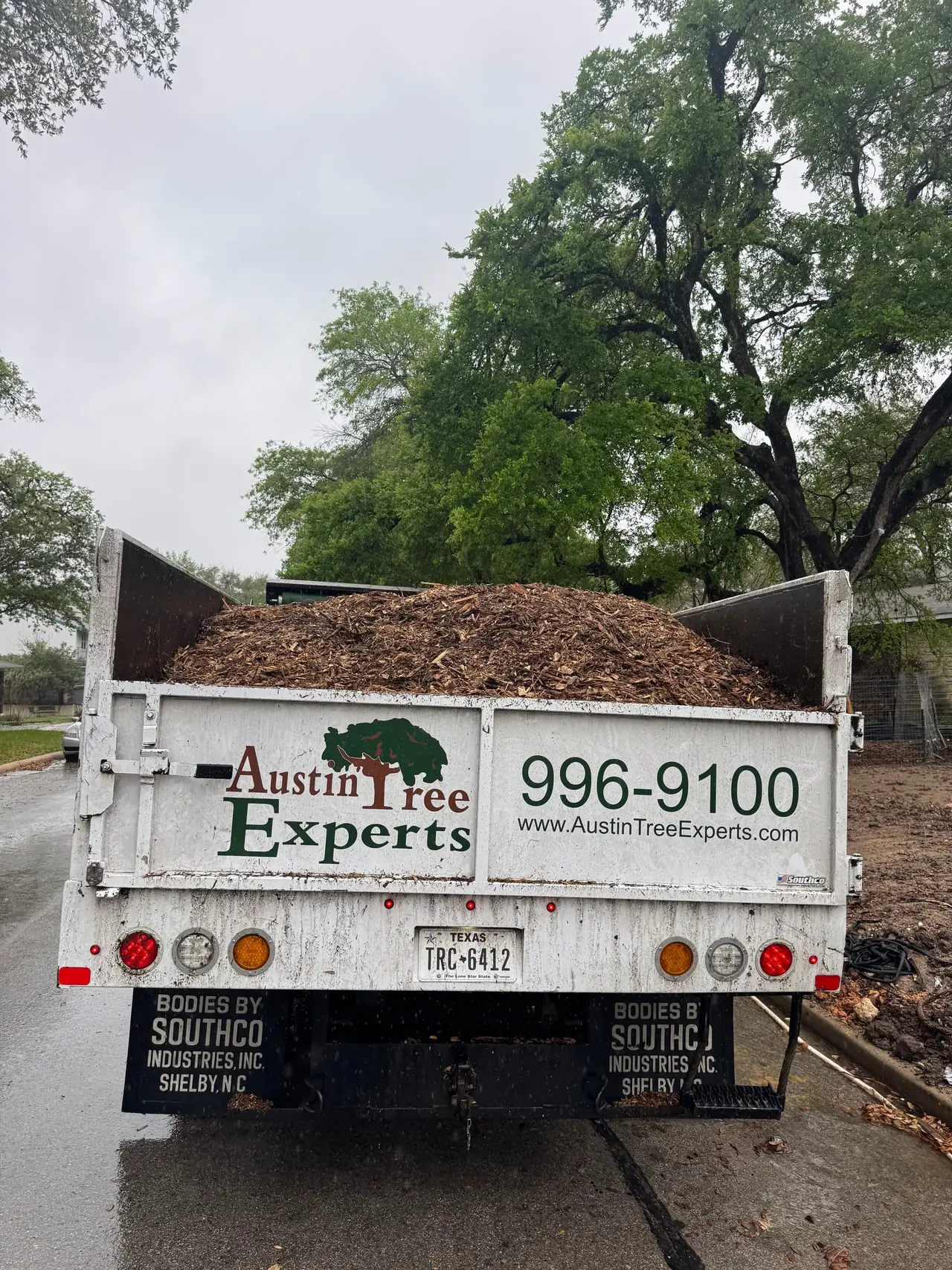
The thirty is a truck-and-trailer combination, and it is worth explaining how we count it. The two vessels behind it hold about thirty-three cubic yards nominal. We sell it as thirty. A real load does not fill and sit perfectly level with the rim of a vessel the way the spec sheet assumes, so quoting thirty means you are never short. You get a real load rather than a theoretical one.

Delivery on its own is fine. You do not have to purchase the spreading service, and you do not have to have any other work going on with us. Spreading is available if you want it, and plenty of people would rather move it themselves on their own schedule.

On what it costs: we do not publish prices, and there is a reason beyond the obvious one. A published number is right up until the day it changes and wrong quietly after that. What is genuinely useful is the shape of the cost, and on mulch the shape is unusual — you are mostly paying for the delivery rather than for the material. The material is a by-product of work we are already doing, and the truck is the expensive part. Load size, distance, and whether you want it spread are what move the number.

What about a free chip drop?

Worth being straight about, because it is the obvious alternative and it is free.

Free chip drop is generally signing up to have the chips delivered at the tree service’s convenience, not yours. Many times, there are logs in the load, and signing up for it doesn’t mean you’ll ever even actually get it.

If the timing genuinely does not matter to you and you have somewhere to put whatever arrives, it is a reasonable thing to try. What we sell is a known quantity of usable material, on a date you picked, at a spot you chose.

How much mulch, and over how much ground

Two numbers, and the second is the one people get wrong.

Depth: three to four inches, sometimes up to five.

Area: as large as you can manage — ideally roughly the size of the tree’s drip line, the extent of the branches overhead. This is where most mulching goes wrong. A neat ring a few feet across at the base of a mature tree is a cosmetic gesture; it is not enough ground to change anything the tree is experiencing. The tree’s roots are out under the branch tips, and that is the ground you are trying to improve.

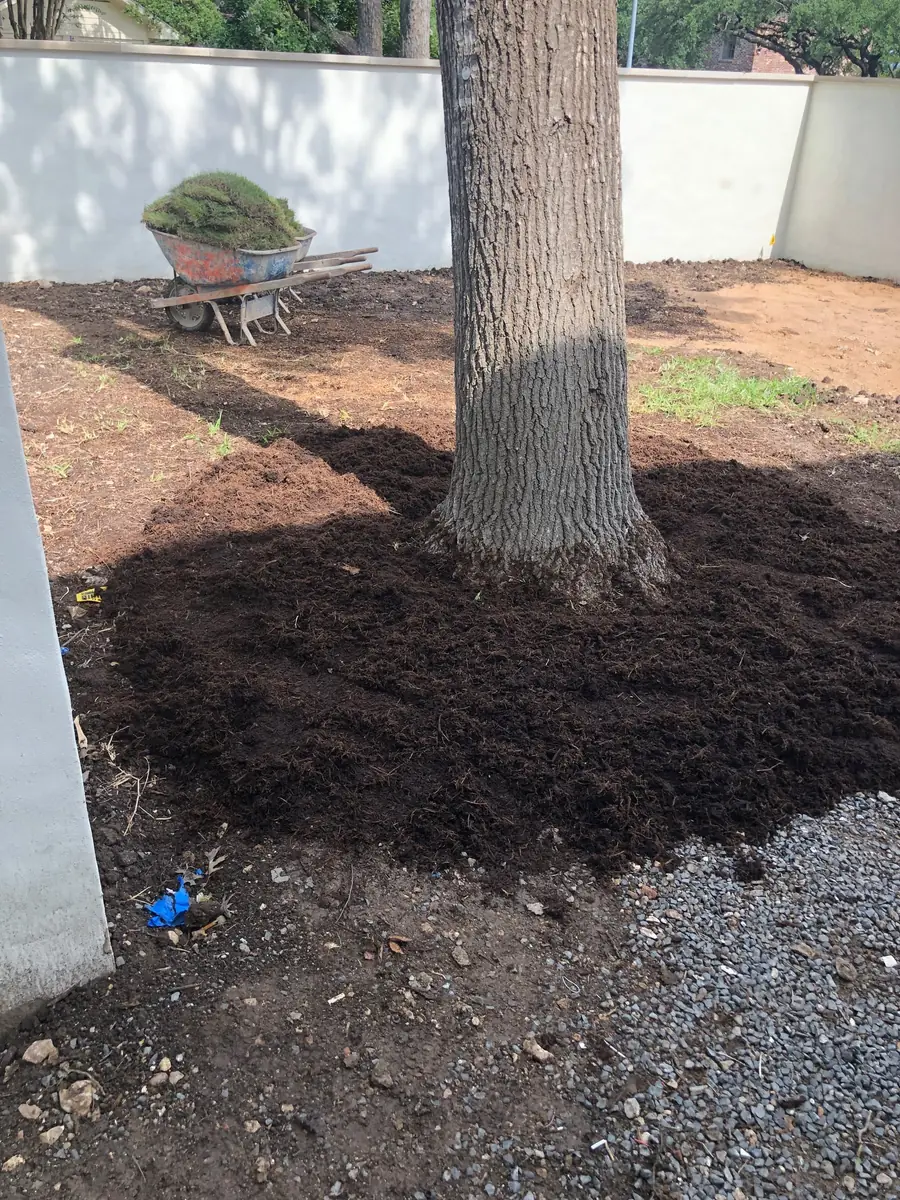
Keep it off the trunk, and away from the root flares. Mulch piled up against the bark is one of the practices that belongs on the malpractice list — not because it kills a tree next season, but because it is one more slow, permanent problem stacked onto whatever else the tree is dealing with. The flare is where the trunk widens into the roots.

To work out the volume: a cubic yard is 27 cubic feet, so at three inches deep one yard covers a little over a hundred square feet. Measure the area, pick your depth, and let our mulch calculator do the arithmetic. If you are not sure how far out to take the bed, that is a reasonable thing to have us look at.

Compost: how much, how often, and when in Central Texas

Compost is a different product from our mulch, and the difference matters enough to say plainly: we buy our compost. The made-from-our-own-work argument above belongs to the mulch. What we bring to compost is knowing how much to put down, over what area, and when.

Compost can be bought delivered by the load, the same as mulch. The material itself comes from different places.

Compost sits third on Keith’s list of what actually keeps trees alive in this market — behind consistent watering and behind not using chemical weed control, and ahead of any fertilizer. The spec:

  • A half-inch to an inch, across the entire root zone. Same area rule as mulch: out to the drip line, not a ring at the trunk. Same instruction about the flares, too.
  • Once or twice a year.
  • Late winter or early spring is the first window — February or March is ideal, and April or May is still good if you miss it.
  • Fall is the second — September or October ideal, November or December still fine.

Those windows are worth aiming at and they are forgiving. Missing February does not mean waiting a year.

It goes down over turf or over mulched garden beds — either is fine. The one ground we genuinely struggle with is aggregate or decomposed granite, where there is no soil surface to work with and we have to look at alternatives.

The failure mode with compost is almost never doing it wrong. It is doing too little of it — not nearly enough area, or not enough volume, to make a difference to something as large as a tree.

Compost and the tree care program are two separate things

Neither one requires the other. They are two separate services; we just often offer them together. You can buy a compost application with nothing else attached, and you can be on the tree care program without ever buying compost.

What Keith does do is recommend the simpler thing first when the simpler thing is what the tree needs: sometimes the compost application is the starting point, and the fertilization gets added as an additional service when it is warranted. That is a recommendation, not a sequence you have to work through.

Turf or bare ground decides how it goes in

The ground you are spreading over decides the method, and around here the ground varies more than people expect. Keith’s rule of thumb for the split:

Interstate Highway 35 is pretty universally recognized as the line in the sand. It’s not perfect and not exactly right, but it’s pretty close.

Deep clay on the east side, thin rocky limestone on the west. Either way the question at the tree is the same one:

What is on the groundHow the compost goes in
TurfSpread across the surface. It settles in on its own, and access to the soil under grass is neither obvious nor easy
Bare groundLoosen the soil and mix the compost into the top layer, rather than laying it on top
Aggregate or decomposed graniteThe hard case — no usable soil surface, and we look for alternative options

Mixing compost into bare ground is where air-spade work comes in. An air spade moves soil with compressed air, which means it can open up and till the top several inches without cutting the roots you are doing all of this for. Keith’s own way of describing what that accomplishes:

The analogy there is repotting your plants. We’re literally trying to improve the quality of soil within the tree’s root zone.

That combination — decompacting the top layer, working compost into it, and laying fresh mulch over the top — is written up in more detail in soil restructuring.

What you can do yourself, and what you would be hiring us for

Worth being direct about this, because mulching and composting are two of the few pieces of tree work a homeowner can genuinely do well without training. Asked what DIY he actively encourages, Keith turned the question around:

Some of the stuff is very doable. Composting — it’s not rocket science. Spreading a thin layer over the grass and around the base of the tree, but away from the root flares. It’s easy to do. It doesn’t need a remarkable amount of training. The type of compost you use isn’t significant… Do them if you’re motivated.

That last clause is the whole frame. He does not sort people into diligent and negligent — the question is whether you actually want to spend a Saturday moving material around your yard. Plenty of people do, and for those people delivery-only exists precisely so you can buy the material and skip the labor.

Here is where it stops being a homeowner job, stated just as plainly:

  • Volume. A drip-line-sized area under a mature tree at three or four inches deep is a lot of yards, and it has to get from the driveway to the tree. That is the part people underestimate, and it is why the area gets cut short.
  • Bare ground. Getting compost into the soil rather than on top of it needs an air spade and a compressor behind it. That is not a rental-counter job, and doing it with a tiller or a shovel cuts the roots you were trying to help.
  • Aggregate and decomposed granite. No amount of enthusiasm fixes a yard with no soil surface. That one is a conversation before it is a job.

The honest split: the material and the spreading are yours if you want them. The judgment about how much, over what area, and whether the ground needs opening up first is what you would be calling us for.

Order a load of mulch

Tell us the size of the load and where you want it. Anywhere in our Central Texas service area, and we will get it there. If you would rather we worked out how much you need and put it down for you, we will come look at the trees first.

Call us today: (512) 996-9100

Request a Free Estimate

Common questions

Do you deliver mulch only, or do I have to buy the spreading too?

Delivery only is fine. You do not have to purchase the spreading service, and you do not have to have any other work going on with us to buy a load. Spreading is available if you want it. Call (512) 996-9100 and tell us the load size and where you want it put down.

What mulch load sizes do you deliver?

Three: 10, 15 and 30 cubic yards. The thirty is a truck-and-trailer combination. The two vessels behind it hold about thirty-three cubic yards nominal and we sell it as thirty, because a real load does not sit perfectly level with the rim of the vessel. You get a real load rather than a theoretical one.

How is your mulch different from bagged mulch?

Most commercially available mulch is double ground, screened for size with the compost screened out, and then run through a coloring system that dyes it with ink. Ours is not that heavily processed — the fines are still mixed in, there is no dye, and it is made from the trees we prune and remove around Austin. It is variable in size and shape and more natural looking. Some people prefer the uniform, colored product for how it looks, and that is a fair preference; ours is the better one for the trees.

How deep should mulch go, and how far out from the tree?

Three to four inches thick, sometimes up to five. Area matters more than most people expect: as large as you can manage, ideally roughly the size of the tree's drip line — the extent of the branches overhead. Keep it off the trunk and away from the root flares. A small ring at the base is not enough ground to change anything for the tree.

How much mulch do I need?

A cubic yard is 27 cubic feet, so at three inches deep one yard covers a bit over a hundred square feet. Measure the area you want covered, pick your depth, and use our mulch calculator to do the arithmetic. If you are not sure how far out to go, we can look at the tree.

What does mulch delivery cost?

We do not publish prices. What is useful to know is the shape of the cost: with our mulch, you are mostly paying for the delivery rather than for the material itself, since the material comes off our own jobs. Load size, where you are, and whether you want it spread are what move the number. Ask for a quote and we will give you one for your address.

How often should compost go down, and when?

Once or twice a year, a half-inch to an inch across the entire root zone. Late winter or early spring is the ideal first window — February or March, with April and May still good if you miss it. Fall is the second — September or October ideal, November or December still fine. The windows are worth aiming at and they are forgiving.

Do I have to be a tree care customer to buy mulch or compost?

No. Mulch and compost are services you can buy on their own, with nothing else attached. They are separate from our tree care program — we often offer them together, but neither one requires the other.

Why not just sign up for a free chip drop?

A free chip drop is signing up to have chips delivered at the tree service's convenience rather than yours. There are often logs in the load, and signing up does not mean you will ever actually get one. If the timing does not matter to you and you have somewhere to put whatever shows up, it is a reasonable thing to try. If you want a known quantity of usable material on a date you picked, that is what we sell.

4.3of 5 from 29 Google reviews
Bj
May 2025
5.0of 5

This team did amazing work with a tree that was giving us issues for years. Everyone is very professional and prompt.

Bri
May 2025
5.0of 5

Brent and the team have done amazing work everytime!!!

Read more customer reviews

Call (512) 996-9100